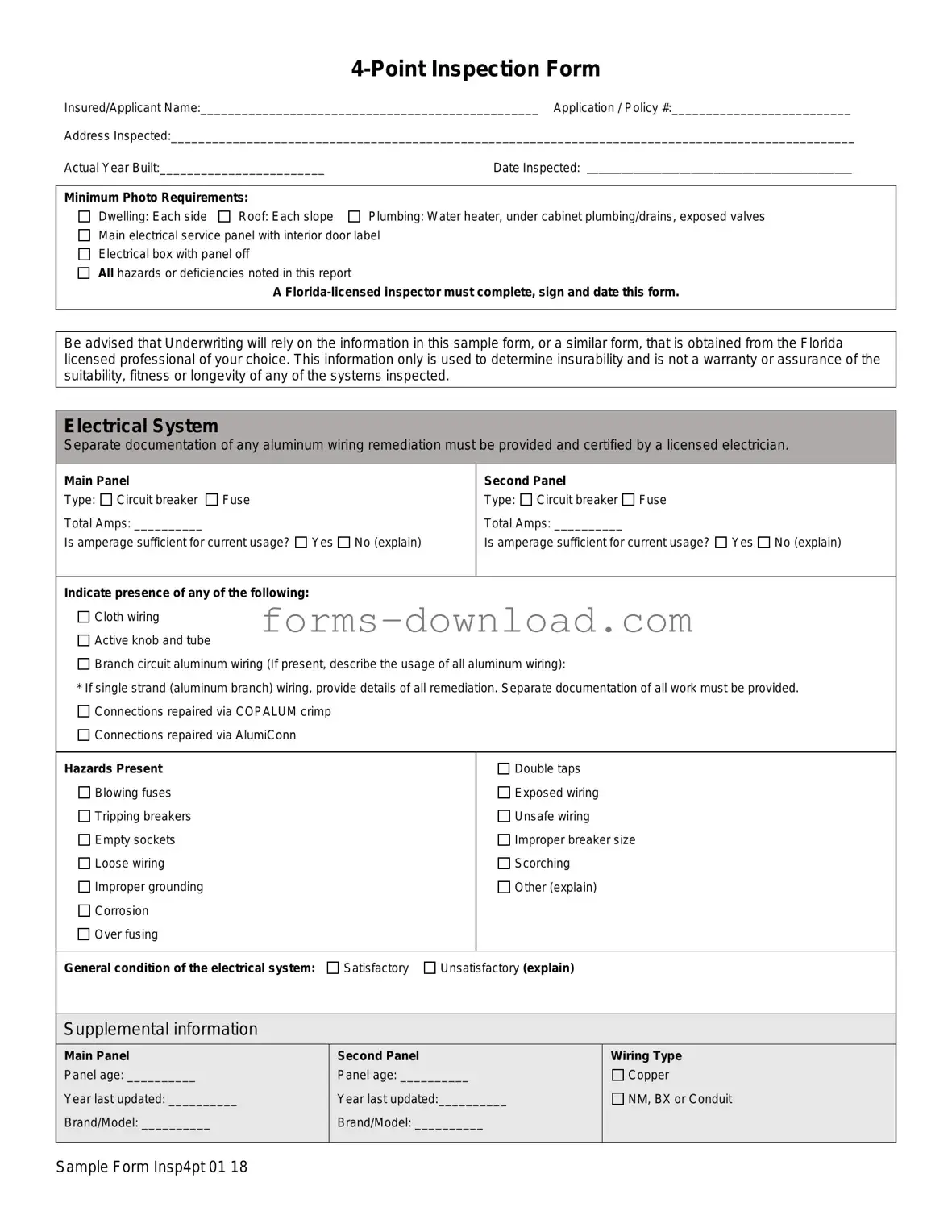
Blank 4 Point Inspection Form
When it comes to ensuring the safety and insurability of a property, the 4 Point Inspection form plays a crucial role. This form evaluates four key systems: the roof, electrical, HVAC, and plumbing. Each section requires detailed documentation, including the age of the systems, their current condition, and any visible hazards. For instance, the roof section assesses materials, age, and signs of deterioration, while the electrical section looks at wiring types and potential safety issues. The HVAC system evaluation checks for functionality and any signs of past issues, and the plumbing section ensures that all fixtures are operational and leak-free. To make the inspection thorough, licensed professionals must include photographs of the property and provide a signature certifying the accuracy of their findings. This structured approach not only helps in assessing the property’s condition but also aids insurance underwriters in determining coverage eligibility.
More PDF Forms
Prescription Bottle Label Requirements - This area is for the prescribing physician's name.
When transferring ownership of a boat in Massachusetts, it is important to utilize the Massachusetts Boat Bill of Sale form, as it contains vital information regarding the buyer and seller, boat details, and the sale price. For more information on how to complete this process, refer to the Bill of Sale for a Boat.
I-589 Application - Failure to file the I-589 in a timely manner may result in loss of asylum eligibility.
Dos and Don'ts
When filling out the 4 Point Inspection form, it's crucial to follow specific guidelines to ensure accuracy and compliance. Here are six things you should and shouldn't do:
- Do provide complete information for the insured/applicant name, application/policy number, and address inspected.
- Do include all required photos of the dwelling, roof, plumbing, and electrical systems.
- Do ensure that a Florida-licensed inspector signs and dates the form.
- Do describe any hazards or deficiencies clearly in the comments section.
- Don't omit any details about the systems' conditions, especially if they are unsatisfactory.
- Don't submit the form without reviewing it for completeness and accuracy.
4 Point Inspection Sample
Insured/Applicant Name:_________________________________________________ Application / Policy #:__________________________
Address Inspected:___________________________________________________________________________________________________
Actual Year Built:________________________ |
Date Inspected: ______________________________________________ |
|
|
|
|
Minimum Photo Requirements: |
|
|
Dwelling: Each side |
Roof: Each slope |
Plumbing: Water heater, under cabinet plumbing/drains, exposed valves |
Main electrical service panel with interior door label
Electrical box with panel off
All hazards or deficiencies noted in this report
A
Be advised that Underwriting will rely on the information in this sample form, or a similar form, that is obtained from the Florida licensed professional of your choice. This information only is used to determine insurability and is not a warranty or assurance of the suitability, fitness or longevity of any of the systems inspected.
Electrical System
Separate documentation of any aluminum wiring remediation must be provided and certified by a licensed electrician.
Main Panel |
|
|
Second Panel |
|
||
Type: |
Circuit breaker |
Fuse |
|
Type: |
Circuit breaker Fuse |
|
Total Amps: __________ |
|
|
Total Amps: __________ |
|
||
Is amperage sufficient for current usage? |
Yes No (explain) |
Is amperage sufficient for current usage? |
Yes No (explain) |
|||
|
|
|
|
|
|
|
Indicate presence of any of the following:

 Cloth wiring

 Active knob and tube

 Branch circuit aluminum wiring (If present, describe the usage of all aluminum wiring):
* If single strand (aluminum branch) wiring, provide details of all remediation. Separate documentation of all work must be provided.

 Connections repaired via COPALUM crimp
 Connections repaired via AlumiConn
Hazards Present |
|
|
Double taps |
Blowing fuses |
|
|
Exposed wiring |
Tripping breakers |
|
|
Unsafe wiring |
Empty sockets |
|
|
Improper breaker size |
Loose wiring |
|
|
Scorching |
Improper grounding |
|
|
Other (explain) |
Corrosion |
|
|
|
Over fusing |
|
|
|
|
|
|
|
General condition of the electrical system: |
Satisfactory |
Unsatisfactory (explain) |
|
Supplemental information
Main Panel |
Second Panel |
Wiring Type |
Panel age: __________ |
Panel age: __________ |
Copper |
Year last updated: __________ |
Year last updated:__________ |
NM, BX or Conduit |
Brand/Model: __________ |
Brand/Model: __________ |
|
|
|
|
Sample Form Insp4pt 01 18
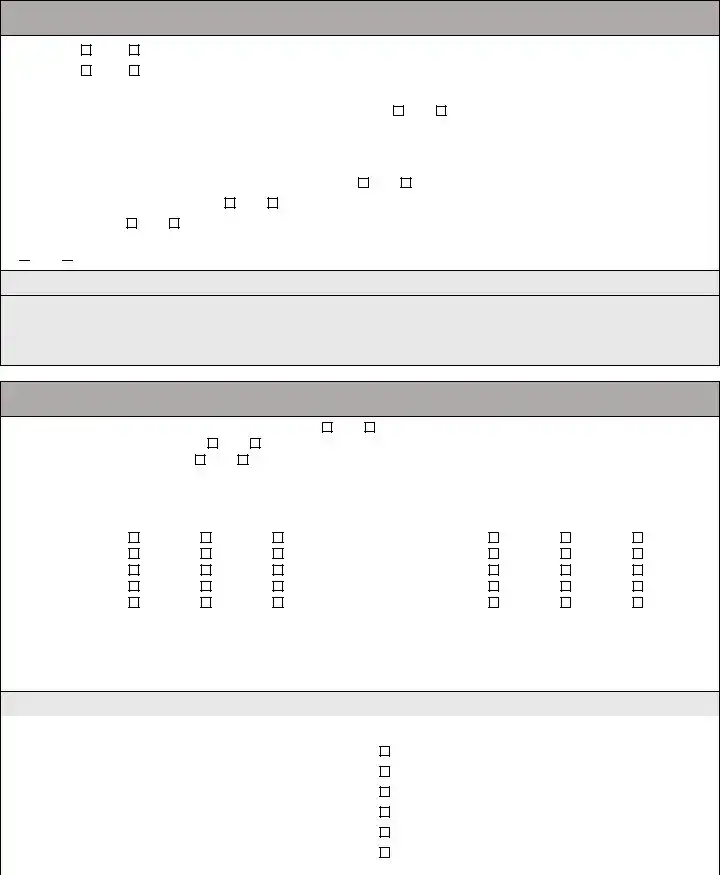
HVAC System
Central AC: |
Yes |
No |
Central heat: |
Yes |
No |
If not central heat, indicate primary heat source and fuel type: _________________________________
Are the heating, ventilation and air conditioning systems in good working order? |
Yes |
No (explain) |
|||||
Date of last HVAC servicing/inspection: ______________ |
|
|
|
|
|||
|
|
|
|
|
|
|
|
Hazards Present |
|
|
|
|
|
|
|
Yes |
No |
|
|||||
Space heater used as primary heat source? |
Yes |
No |
|
|
|
||
Is the source portable? |
Yes |
No |
|
|
|
|
|
Does the air handler/condensate line or drain pan show any signs of blockage or leakage, including water damage to the surrounding area?

 Yes
Yes 
 No
No
Supplemental Information
Age of system: _____________
Year last updated: _____________
(Please attach photo(s) of HVAC equipment, including dated manufacturer’s plate)
Plumbing System
Is there a temperature pressure relief valve on the water heater? |
Yes |
No |
|
||
Is there any indication of an active leak? |
Yes |
No |
|
|
|
Is there any indication of a prior leak? |
Yes |
No |
|
|
|
Water heater location: _______________________________________________ |
|
||||
|
|
|
|||
General condition of the following plumbing fixtures and connections to appliances: |
|
||||
Satisfactory Unsatisfactory |
N/A |
|
Satisfactory Unsatisfactory |
N/A |
|
|
|||||
Dishwasher |
|
|
|
Toilets |
|
Refrigerator |
|
|
|
Sinks |
|
Washing machine |
|
|
|
Sump pump |
|
Water heater |
|
|
|
Main shut off valve |
|
Showers/Tubs |
|
|
|
All other visible |
|
|
|
|
|
|
|
If unsatisfactory, please provide comments/details (leaks, wet/soft spots, mold, corrosion, grout/caulk, etc.).
Supplemental Information
Age of Piping System: |
|
Type of pipes (check all that apply) |
|
|
_____ |
Original to home |
|
Copper |
|
|
|
|
|
|
_____ |
Completely |
|
PVC/CPVC |
|
|
|
|
|
|
_____ |
Partially |
|
Galvanized |
|
|
|
|
|
|
(Provide year and extent of renovation in the comments below) |
|
PEX |
|
|
|
|
|
|
|
|
|
|
Polybutylene |
|
|
|
|
Other (specify) |
|
|
|
|
|
|
Sample Form Insp4pt 01 18
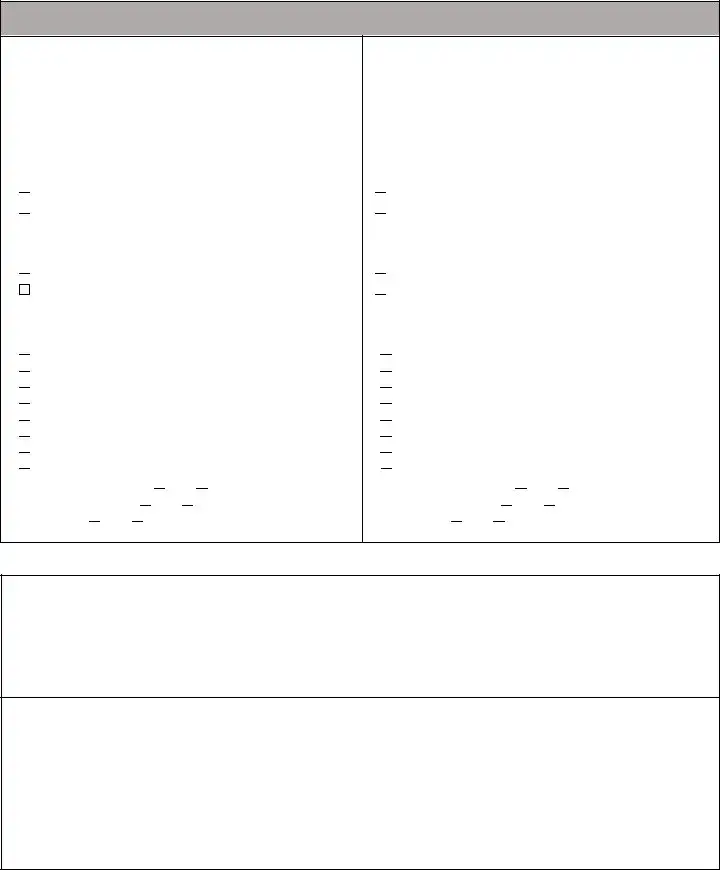
Roof (With photos of each roof slope, this section can take the place of the Roof Inspection Form.)
Predominant Roof
Covering material: __________
Roof age (years): __________
Remaining useful life (years): __________
Date of last roofing permit: __________
Date of last update: __________
If updated (check one):

 Full replacement
 Partial replacement
%of replacement: __________
Overall condition:

 Satisfactory
Unsatisfactory (explain below)
Any visible signs of damage / deterioration?
(check all that apply and explain below)

 Cracking

 Cupping/curling

 Excessive granule loss

 Exposed asphalt

 Exposed felt

 Missing/loose/cracked tabs or tiles

 Soft spots in decking
 Visible hail damage
Any visible signs of leaks? 
 Yes
Yes  No
No
Attic/underside of decking  Yes
Yes  No
No
Interior ceilings 
 Yes
Yes 
 No
No
Secondary Roof
Covering material: __________
Roof age (years): __________
Remaining useful life (years): __________
Date of last roofing permit: __________
Date of last update: __________
If updated (check one):

 Full replacement
 Partial replacement
%of replacement: __________
Overall condition:
 Satisfactory
 Unsatisfactory (explain below)
Any visible signs of damage / deterioration?
(check all that apply and explain below)

 Cracking

 Cupping/curling

 Excessive granule loss

 Exposed asphalt

 Exposed felt

 Missing/loose/cracked tabs or tiles

 Soft spots in decking
 Visible hail damage
Any visible signs of leaks? 
 Yes
Yes  No
No
Attic/underside of decking  Yes
Yes  No
No
Interior ceilings 
 Yes
Yes 
 No
No
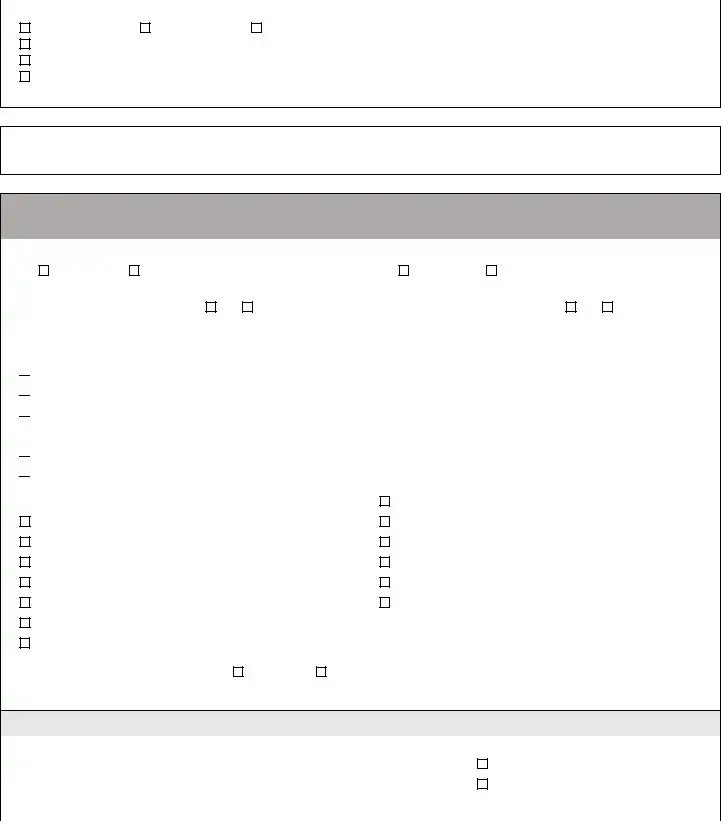
Additional Comments/Observations (use additional pages if needed):
All
Inspector Signature |
|
Title |
|
License Number |
|
Date |
|
|
|
|
|
|
|
Company Name |
|
License Type |
|
Work Phone |
|
|
Sample Form Insp4pt 01 18
Special Instructions: This sample
Photo Requirements
Photos must accompany each
•Dwelling: Each side
•Roof: Each slope
•Plumbing: Water heater, under cabinet plumbing/drains, exposed valves
•Open main electrical panel and interior door
•Electrical box with the panel off
•All hazards or deficiencies
Inspector Requirements
To be accepted, all inspection forms must be completed, signed and dated by a verifiable
•A general, residential, or building contractor
•A building code inspector
•A home inspector
Note: A
Documenting the Condition of Each System
The
Additional Comments or Observations
This section of the
•Updates: Identify the types of updates, dates completed and by whom
•Any visible hazards or deficiencies
•Any system determined not to be in good working order
Note to All Agents
The writing agent must review each
Sample Form Insp4pt 01 18
Listed Questions and Answers
-
What is a 4-Point Inspection Form?
A 4-Point Inspection Form is a detailed document used primarily for insurance purposes. It evaluates the condition of four critical systems in a home: the electrical system, plumbing system, HVAC (heating, ventilation, and air conditioning) system, and the roof. This form helps insurance companies assess the insurability of a property.
-
Who is qualified to complete the 4-Point Inspection Form?
Only a Florida-licensed inspector can complete, sign, and date this form. Acceptable professionals include general contractors, building code inspectors, and home inspectors. Each professional must be licensed in Florida and capable of certifying the condition of the systems they inspect.
-
What are the minimum photo requirements for the inspection?
The inspection must include photographs of each side of the dwelling, each slope of the roof, and various plumbing components such as the water heater and exposed valves. Additionally, the main electrical panel must be photographed with the interior door labeled, and the electrical box should be shown with the panel removed. All noted hazards or deficiencies must also be documented with photos.
-
Why is a 4-Point Inspection Form necessary for insurance?
This form provides insurers with essential information to determine the insurability of a property. It highlights the condition of vital systems and identifies any potential hazards. Insurers rely on this data to make informed decisions regarding coverage and to assess risk levels associated with insuring the property.
-
What happens if the inspection reveals deficiencies?
If the 4-Point Inspection identifies deficiencies in any of the systems, the property may be deemed unsatisfactory for insurance coverage. The insurer may require repairs or upgrades to be completed before coverage can be bound. In some cases, properties with significant issues may be uninsurable until those problems are resolved.
-
Can I use a different inspection form?
While this specific 4-Point Inspection Form is not mandatory, any alternative inspection report submitted must contain at least the same level of detail. It is crucial that the information provided is comprehensive enough for underwriting purposes.
-
What should I do if my property has aluminum wiring?
If aluminum wiring is present, separate documentation of any remediation must be provided and certified by a licensed electrician. This includes detailing the type of remediation performed, such as COPALUM crimp connections or AlumiConn connections. This documentation is essential for the insurer's assessment.
-
What if my HVAC system is not central?
If your home does not have a central HVAC system, you should indicate the primary heat source and fuel type on the form. It is important to provide details about the condition of any alternative heating systems, as this information is crucial for the insurance evaluation.
-
What does "acceptable condition" mean on the form?
Acceptable condition indicates that each inspected system is functioning as intended without visible hazards or deficiencies. A Florida-licensed inspector must certify that the roof, electrical, HVAC, and plumbing systems meet these standards.
-
What should I do if I have additional comments or observations?
If there are any updates, visible hazards, or deficiencies noted during the inspection, the inspector should provide detailed comments in the designated section of the form. This information helps ensure that all relevant issues are documented for the insurer's review.
Form Overview
| Fact Name | Description |
|---|---|
| Purpose | The 4-Point Inspection Form evaluates the condition of the roof, electrical, HVAC, and plumbing systems of a property. |
| Photo Requirements | Photos of each side of the dwelling, each slope of the roof, and key plumbing and electrical components must be included. |
| Inspector Credentials | A Florida-licensed inspector must complete, sign, and date the form. This ensures the inspection meets state standards. |
| Insurability Use | Underwriting uses the information from this form to determine the insurability of the property, but it does not guarantee system performance. |
| Electrical System Documentation | If aluminum wiring is present, separate documentation of remediation must be certified by a licensed electrician. |
| State-Specific Law | In Florida, the use of this form is governed by state insurance regulations, requiring licensed professionals for inspections. |